
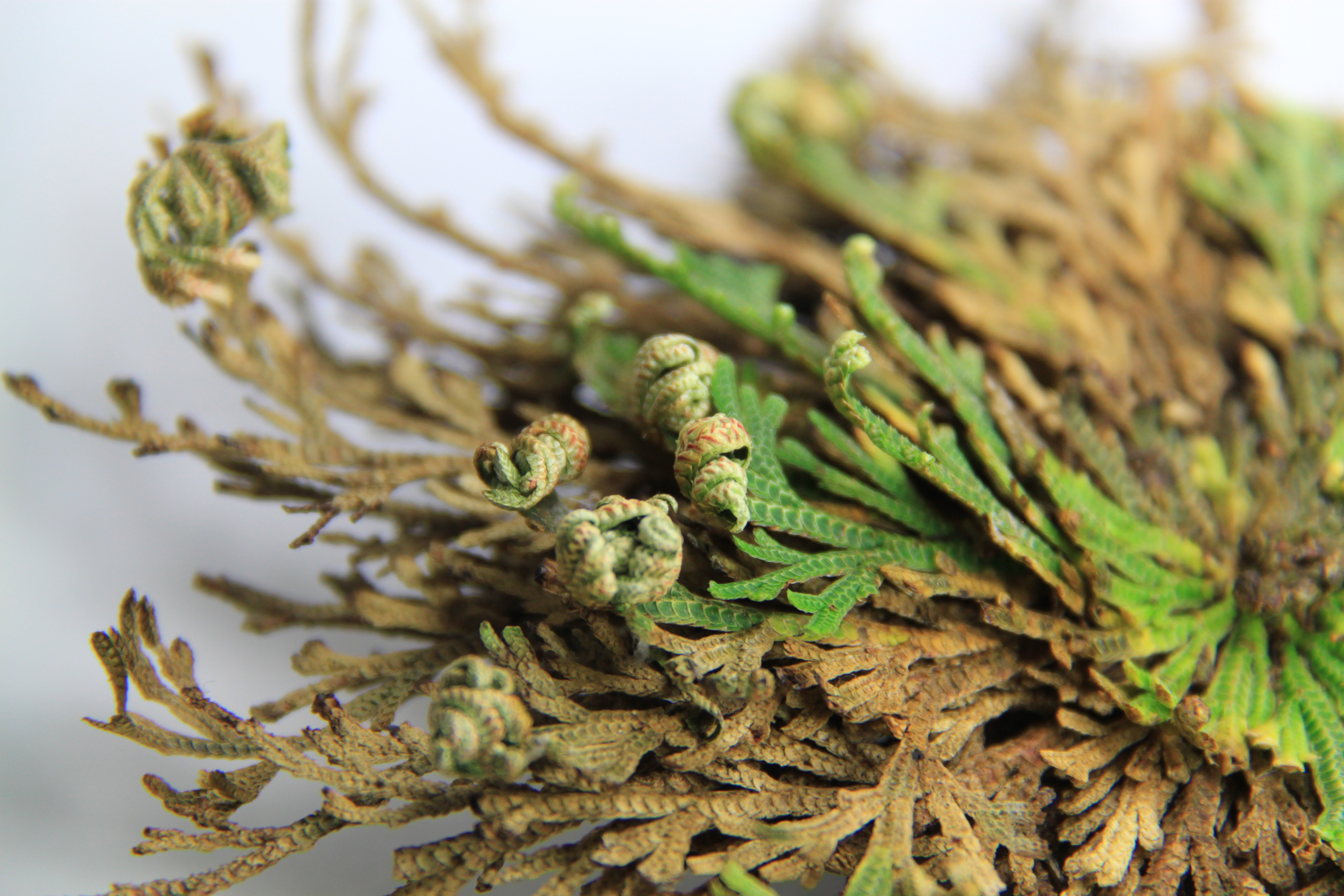

About the Water and Life Interface Institute (WALII, pronounced “Wally”): WALII studies how life interacts with water, from the molecular to the organismal level, across plants, fungi, and animals. WALII is a virtual institute, with scientists located at 12 research facilities across the United States. WALII team members have diverse expertise, ranging from biophysics to plant biology, and experience with several desiccation-tolerant and -sensitive systems. Working together, WALII researchers aim to uncover the rules by which organisms interact with water, exploring four integrated themes:
The Institute’s long-term goals are to understand how organisms can tolerate desiccation; invent technologies and concepts to study anhydrobiosis; engineer macromolecules, cells, and organisms that can survive desiccation; and produce the next generation of leaders in all sectors of our society. To achieve these aims, WALII provides mentoring, outreach opportunities, and professional development for all affiliated scientists. That includes funding support for travel to scientific conferences, and internal professional development/training programs.
Open Positions
2026 Summer Internships for Undergraduates
Summer internships for undergraduate students are available at six of the Water and Life Interface Institution campuses. Each location has a separate application process and offers different experiences. Students interested in WALII projects are encouraged to apply to multiple campuses. No previous research experience is required. Learn more about how to apply to the WALII Summer Internships here!
Interns working on WALII projects will form a virtual cohort*. Interns will participate in a mentorship program, online career development activities, and seminars. All internships are paid opportunities, but the stipend amounts and program benefits may vary by geographic region.
*Interns hosted by labs at Baylor College of Medicine, Syracuse University, California State University Channel Islands, Michigan State University, and University of Wisconsin-Madison will also be part of an on-campus cohort of interns unaffiliated with WALII and will have additional opportunities for in-person social activities.
Now Accepting Summer Internship Applications:
- Baylor College of Medicine (Boeynaems Lab). WALII Project: Molecular rules of membraneless organelle water responsiveness.
Applications are due January 30, 2026. Click here to learn more and apply.
- California State University Channel Islands (Tapia Lab). WALII Project: How does partial re-hydration affect desiccation tolerance?
Applications are due March 27, 2026. Click here to learn more and apply.
- Michigan State University (Rhee Lab and the VanBuren Lab).
- WALII Project (Rhee Lab): Investigating molecular pathways essential for seeds to survive desiccation and rehydration.
- WALII Project (VanBuren Lab): Identify conserved and lineage-specific molecular responses to anhydrobiosis.
Applications are due February 1, 2026. Click here to learn more and apply.
- Syracuse University (Sukenik Lab). WALII Project: How do proteins help protect cells from desiccation?
Applications are due February 17, 2026. Click here to learn more and apply.
- University of Wyoming (Boothby Lab). WALII Project: Engineering plants for extreme stress tolerance.
Applications are due March 27, 2026. Click here to learn more and apply.
- University of Wisconsin-Madison (Otegui Lab). WALII Project: How do cellular structures change during dehydration to solid-state? What are the cellular and molecular changes that allow pollen grains to survive desiccation?
Applications are due February 15, 2026. Click here to learn more and apply.
 Water & Life Interface Institute