


WALII’s Inaugural Symposium
Note: Recordings of this symposium is available on Youtube. Click this link to view the playlist of recordings: https://youtube.com/playlist?list=PL5GgqbCZxliW_mqXLpOktEAMfRyi3BztU&si=uXNaFzrfQvWxgqfa
The inaugural WALII Symposium on November 18, 2025 is the new annual meeting bringing together researchers and the broader scientific community to explore one of biology’s most remarkable phenomena – anhydrobiosis, the ability of life to persist without water.
Anhydrobiosis is studied across all scales,from molecules to ecosystems,and spanning the tree of life. The WALII Symposium highlights this breadth by asking: How do different organisms endure desiccation and rehydration? And how can we advance our understanding by developing new tools, sharing methods, and working across systems and scales?
To reflect this broad scope, the program is organized into four thematic sessions:
- Science of Drying & Rehydrating
- Tools & Technologies
- Engineering, Biotechnology, and Applications of Desiccation Tolerance
- Integrating Across Scales & Organisms
As an NSF-funded Biology Integration Institute, the Water and Life Interface Institute (WALII) unites researchers from 12 labs representing molecular biology, biophysics, bioinformatics, ecology, and beyond. We study anhydrobiosis across organisms such as plants, tardigrades, nematodes, yeast, and fungi. Together, we aim to uncover fundamental principles, build translational tools, and foster a welcoming community dedicated to understanding how life persists without water.
With the launch of the WALII Symposium, we begin a tradition of annual meetings that bring the anhydrobiosis community together for cross-disciplinary exchange, collaboration, and discovery.
Invited Speakers
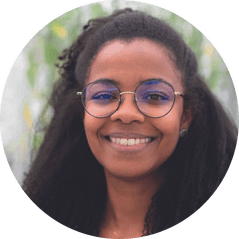
Mariana Silva Artur, PhD
Laboratory of Plant Physiology, Wageningen University & Research
Dr. Mariana Silva Artur received her PhD at the Laboratory of Plant Physiology (PPH) of Wageningen University & Research, where she studied the evolution, structure, and function of LEA proteins from seeds and the resurrection plant Xerophyta schlechteri. After completing her PhD, Dr. Silva Artur went on to complete her postdoctoral studies at Utrecht University where she researched development and drought responses of tomato root exodermis. Later, Dr. Silva Artur continued as a postdoctoral researcher in the Seeds for Future Initiative of the Wageningen Seed Science Centre within PPH, where she now has her own research group on plant desiccation tolerance and seed maturation, the Seed Resilience Group.
Erez Lieberman Aiden, PhD
University of Texas, Medical Branch and Rice University
Dr. Erez Lieberman Aiden is a professor of Biosciences at Rice University as well as Professor and Department Chair of Biochemistry and Molecular Biology at the University of Texas, Medical Branch. The Aiden Lab – also known as the Center for Genome Architecture – focuses on exploring all aspects of genome structure from 1D sequence of the bases to the 3D folding that enables them to fit inside the nucleus of a cell. In the Aiden lab, they ask: How are genomes of humans and other organisms folded in three dimensions within a functioning cell? How is this folding controlled? And how does it, in turn, regulate other cellular processes? To answer these questions, they combine the development of new molecular technologies, high-throughput DNA sequencing and powerful computational and biophysical methods. The lab is also extremely interested in the application of massive datasets – including, but not limited to, DNA sequence – as an approach to making previously intractable measurements possible.

Amy Gladfelter, PhD
Duke University
Dr. Amy Gladfelter received her PhD from Duke University, where she is now a Professor of Cell Biology at the Duke University Medical School and a Professor of Biomedical Engineering at the Duke University Pratt School of Engineering. The Gladfelter lab studies how cells are organized in time and space by combining microscopes with math and applying computational, genetic, and biochemical approaches in fungi and mammalian placenta.
Erin Green, PhD
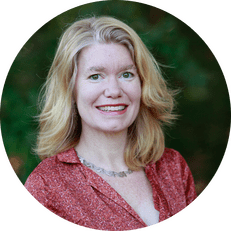
University of Chicago
Dr. Erin Green received her B.S. from the University of Pittsburgh, and her Ph.D. in Molecular Microbiology from Tufts University, where she trained under Dr. Joan Mecsas. Dr. Green then began her postdoctoral work at Vanderbilt University, within Dr. Eric Skaar’s lab. There she studied mechanisms of stress resistance and virulence in Acinetobacter baumannii. Now she’s an Assistant Professor of Microbiology and an Assistant Professor or Medicine at the University of Chicago, where her lab is looking at discovering novel mechanisms by which bacterial pathogens sense and adapt to long-term desiccation stress.

Registration
Registration is now closed.
Abstract Submission
Abstract submission is now closed.
Schedule
| Time (PST) | Section |
|---|---|
| 7:00 – 7:15 AM | Opening Remarks |
| 7:15 – 7:45 AM | Session 1: Science of Drying & Rehydrating Invited speaker: Mariana Silva Artur, Wageningen University “Drying to Survive: Seed Maturation as a Unique System to Study Resilience and Evolution” |
| 7:45 – 8:00 AM | Contributed Talk: Coral Martinez-Martinez, University of Wisconsin, Madison “Visualizing the Cellular and Molecular Bases Underlying Desiccation Tolerance: The Ultrastructure of the Pollen” |
| 8:00 – 8:15 AM | Contributed Talk: Saurabh Mishra, National Institute of Pharmaceutical Education and Research, and Adrian Jinich, University of California, San Diego “Candidate Transmission Survival Genome of Mycobacterium Tuberculosis Reveals the Presence of Hydrophilins Implicated in Desiccation Tolerance” |
| 8:15 – 8:30 AM | Contributed Talk: Sheila Ferer, California State University, Channel Islands “Proteome Dynamics in Desiccation and Rehydration” |
| 8:30 – 8:45 AM | Break |
| 8:45 – 9:15 AM | Session 2: Tools & Technologies Invited speaker: Erez Lieberman Aiden, University of Texas, Medical Branch and Rice University “Fossils of Ancient Chromosomes” |
| 9:15 – 9:30 AM | Contributed Talk: Katalin Solymosi, ELTE Eötvös Loránd University “Shrinkage and Subsequent Dilatation of the Granum Thylakoids During Severe Drought Stress and Subsequent Recovery as Revealed by Transmission Electron Microscopy and in Vivo Small-Angle Neutron Scattering” |
| 9:30 – 9:45 AM | Contributed Talk: F. Şeyma Gökdemir, Başkent University, Institute of Food, Agriculture and Livestock Development “Comparative Network Analysis of Arabidopsis DREB1/2 Transcription Factors: Functional Divergence in Abiotic Stress Adaptation” |
| 9:45 – 10:00 AM | Contributed Talk: Kara Hunter, Syracuse University “Designing Disordered Proteins for Desiccation Protection” |
| 10:00 – 11:00 AM | Break |
| 11:00 – 11:30 AM | Session 3: Engineering, Biotechnology, and Applications of Desiccation Tolerance Invited speaker: Amy Gladfelter, Duke University “A Physical Code in mRNA as an Adaptive Mechanism” |
| 11:30 – 11:45 AM | Contributed Talk: Pandurang Ramrao Devde, Mizoram University, India & CNRS-IBMP University of Strasbourg, France “Decoding the Role of Abscisic Acid-Induced Universal Stress Proteins for Stress Adaptation and Plant Development in Arabidopsis thaliana“ |
| 11:45 AM – 12:00 PM | Contributed Talk: Maciej Gielnik, Department of Molecular Biology and Genetics, Aarhus University, Denmark “Synthetic IDPs as Tunable Desiccation Chaperones” |
| 12:00 – 12:15 PM | Contributed Talk: Danielle Hoffmann, Michigan State University “Identifying and Engineering Genes for Improved Seed Germination Under Osmotic. Stress in Field Pennycress” |
| 12:15 – 12:30 PM | Break |
| 12:30 – 1:00 PM | Session 4: Integrating Across Scales & Organisms Invited speaker: Erin Green, University of Chicago “Elucidating Mechanisms of Desiccation Tolerance in Acinetobacter baumannii” |
| 1:00 – 1:15 PM | Contributed Talk: Asif Ahmed Sami, Wageningen University and Research “Cross-roads of Stress and Development: Desiccation Drives Young Transcriptome During Seed Maturation” |
| 1:15 – 1:30 PM | Contributed Talk: Davide Gerna, Royal Botanic Gardens, Kew “Intracellular Glass Fragility Distinguishes The Desiccation Response of Embryonic Axes from Recalcitrant and Orthodox Seeds” |
| 1:30 – 1:45 PM | Contributed Talk: Dae Kwan Ko, Michigan State University “Decoding Abiotic Stress Resilience in Sorghum: A Transcriptomic Framework for Climate-Ready Crops” |
| 1:45 – 2:00 PM | Closing Remarks |
 Water & Life Interface Institute