


The Anhydrobiosis Research, Tools & Techniques Public Webinar Series
The Anhydrobiosis Research, Tools & Techniques Webinar Series is a public seminar and technical training series featuring research talks and practical workshops focused on the science of desiccation tolerance across organisms and scales. Sessions highlight both scientific advances and applied methods, with the goal of supporting training, collaboration, and knowledge sharing across the anhydrobiosis community.
Hosted by the Water and Life Interface Institute (WALII), each session will feature invited speakers who share cutting-edge research as well as practical tools, techniques, and approaches that can support scientists working across this interdisciplinary field.
The series will take place the second Thursday of each month starting April 9, 2026 at 8 am PT / 9 am MT / 10 am CT / 11 am ET*.
*The October 8, 2026 seminar will be held at 9 am PT / 10 am MT / 11 am CT / 12 pm ET
*The June 11, 2026 seminar will be held at 7 am PT / 8 am MT / 9 am CT / 10 am ET
Speakers
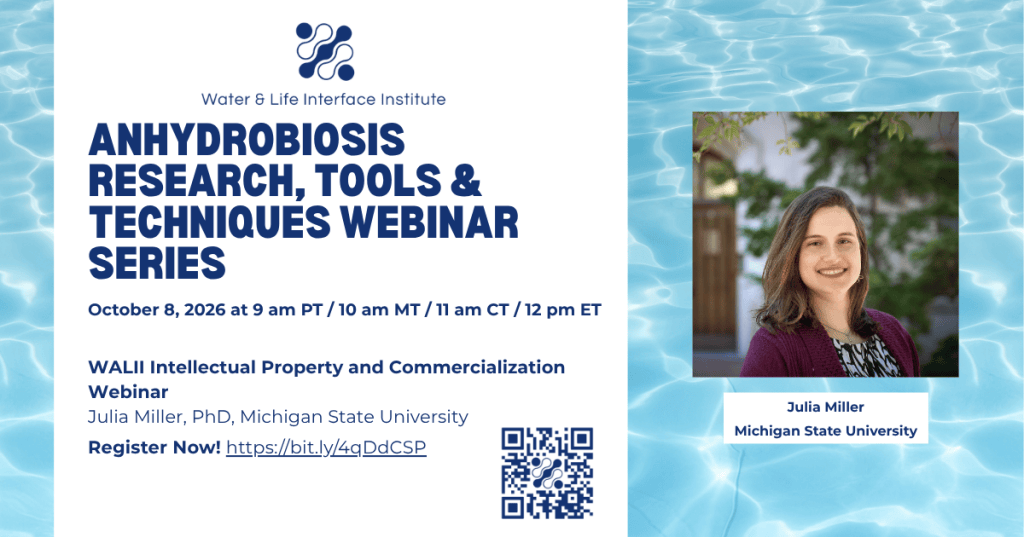
*The October 8, 2026 seminar will be held at 9 am PT / 10 am MT / 11 am CT / 12 pm ET
WALII Intellectual Property and Commercialization Webinar
Julia Miller, PhD, Michigan State University
Have you ever wondered what it takes to turn a promising research discovery into a product/service that improves lives? This webinar will explain the commercialization process, from invention disclosure and intellectual property protection to industry partnerships and licensing opportunities. By the end of the session, attendees will be better equipped to identify commercialization opportunities, recognize potential barriers, and engage effectively with their institution’s technology transfer office.

Understanding Vegetative Desiccation Tolerance as a Tool for Climate Smart Agriculture
Jill Farrant, PhD, University of Cape Town
Drought poses a significant threat to global agriculture, with climate change driving increased aridification across key food-producing regions. This challenge is particularly critical in Africa, where approximately 95% of agriculture depends on rainfall. Most conventional crops do not survive even moderate water loss, and while some progress has been made in improving drought resistance, these adaptations often fail under severe and prolonged dry conditions. A promising avenue for enhancing crop resilience involves the study of Angiosperms that exhibit vegetative desiccation tolerance (tolerance of loss of up to 95% of cellular water), commonly called resurrection plants. Understanding the molecular and physiological mechanisms underlying this phenomenon could pave the way for developing crops with enhanced resilience to water deficit stress. Using a multidisciplinary systems biology approach, we have investigated how various resurrection plant species, each serving as a model for crop improvement, regulate molecular and physiological responses to withstand extreme drought conditions. In this presentation I will provide an overview of some of the key processes involved in vegetative desiccation tolerance and point to future applications for improving agricultural sustainability in increasingly drought prone environments.
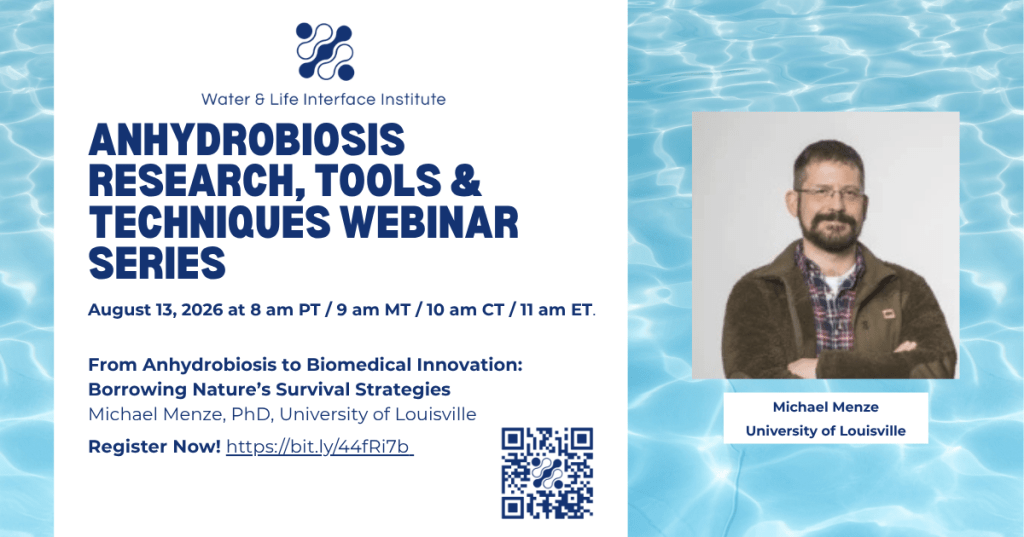
From Anhydrobiosis to Biomedical Innovation: Borrowing Nature’s Survival Strategies
Michael Menze, PhD, University of Louisville
What if red blood cells could survive drying and be rehydrated when and where they are needed most? Some organisms in nature possess an extraordinary ability: they can lose nearly all cellular water, remain in a dry state approaching suspended animation for years, and return to life when water becomes available. This phenomenon offers both scientific inspiration and a potential roadmap for addressing a critical medical need, such as cold-chain-independent transport and storage of donated red blood cells (RBCs). After collection, RBCs remain transfusable for only 42 days, limiting their availability in remote healthcare settings and far-forward military environments, where access to blood can mean the difference between life and death. Although dry preservation could dramatically extend the shelf life and portability of RBC units, viable dry-preserved RBCs do not yet exist.
This seminar will briefly outline our current understanding of how some anhydrobiotic animals, such as the encysted embryos of the brine shrimp Artemia franciscana, use protective molecules, including trehalose and intrinsically disordered late embryogenesis abundant proteins (LEAPs), to withstand extreme water loss. Drawing on the experience of founding a biotechnology startup, it will explore the scientific challenges of translating these natural adaptations into methods for preserving RBCs in a desiccated state. The seminar will reflect on the path from curiosity-driven research to real-world innovation, transforming discoveries at the laboratory bench into technologies that may one day save lives. It will also discuss the challenges of adapting these strategies to engineer desiccation tolerance in RBCs and the journey of translating laboratory discoveries into practical solutions through biotechnology entrepreneurship.
Disclosure: Michael Menze is a founder of and has a financial interest in DesiCorp, Inc., which is associated with intellectual property related to technologies discussed in this seminar. The views expressed are his own and do not necessarily reflect those of the University of Louisville or DesiCorp, Inc.
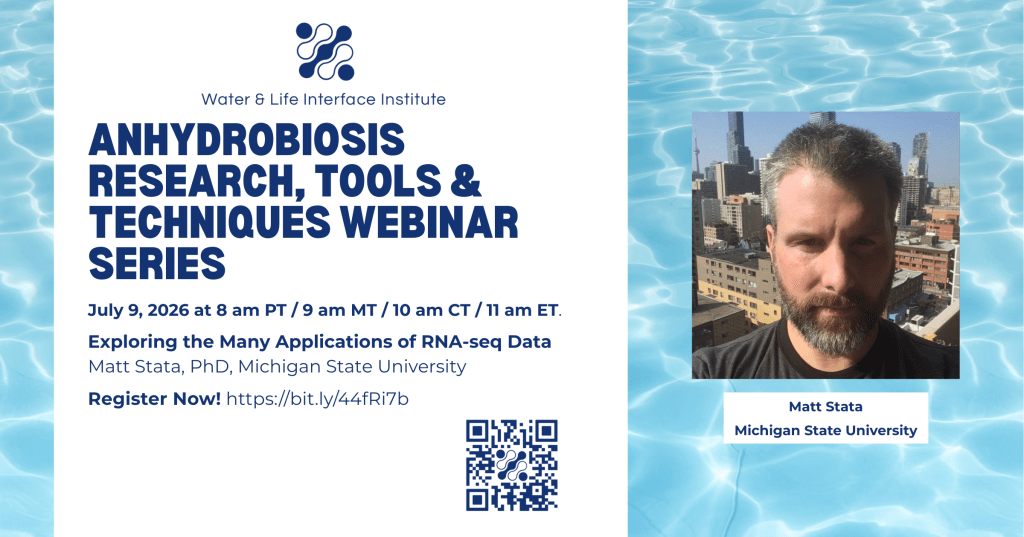
Exploring the Many Applications of RNA-seq Data
Matt Stata, PhD, Michigan State University
RNA-seq data are critical for many applications in biology beyond just quantifying gene expression. Transcriptomic data can be assembled de novo in the absence of a reference genome to obtain complete sequence information for all expressed genes, and is also critical for gene model prediction in newly assembled reference genomes. In this webinar I will provide a quick tour of diverse software tools for quality checking and mapping RNA-seq data, quantifying gene expression both at the level of loci and isoforms, de novo transcriptome assembly, and genome annotation. Software tools covered will include FastQC, Trimmomatic, HISAT2, Salmon, Trinity, TransDecoder, UnigeneFinder, and BRAKER3. I will also provide example slurm job scripts for running each program with detailed instructions for attendees to modify them for their own use cases.
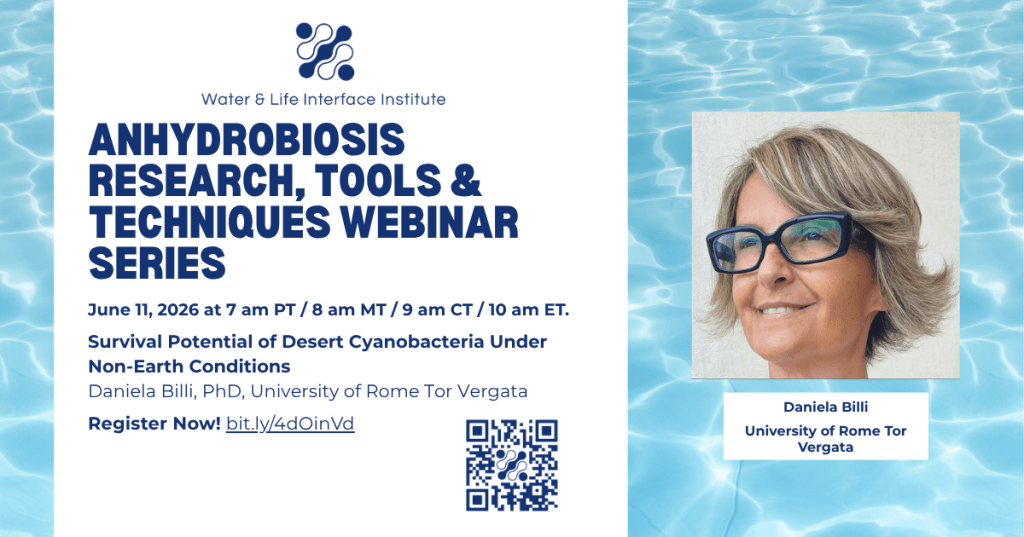
Survival Potential of Desert Cyanobacteria Under Non-Earth Conditions
Daniela Billi, PhD, University of Rome Tor Vergata
The search for life on potentially habitable worlds in the solar system and around other stars is driven by the existence on Earth of microorganisms adapted to living in prohibitive conditions. Cyanobacteria resistant to desiccation and radiation, isolated from hot and cold deserts, are a model system for extending our understanding of the adaptive capabilities of life as we know it through the exposure to non-terrestrial environments simulated in the laboratory or in real space conditions. Desert cyanobacteria have been exposed in the dried state to the space conditions using the ESA EXPOSE facility installed outside the Italian Space Station during the ESA/ASI BOSS_Cyano and BIOMEX_Cyano experiments. When the accumulated damage did not exceed repair capabilities, insights were gained on the constraints that life can withstand. When the accumulated damage exceeded the repair potential, biomarker detectability contributed to the search of life beyond Earth. The capability of repairing upon retrieval back to Earth and rehydration, the DNA damage accumulated during 1.5-year exposure in space has implications for future cyanobacterial-based technologies. In this context, the effect of microgravity on DNA repair capability will be investigated with the ASI BIORIDER experiment to be performed in the maiden flight of the ESA Space Rider. Moreover, the capability of few desert strains to harvest near-infrared is also under investigation in the context of the ASI ASTERIA project that holds implications for oxygenic photosynthesis on exoplanets. Since the ultraviolet radiation environment – particularly within the UVC band – is limiting the potential habitability of planetary surfaces, cyanobacterial resistance to UVC radiation provides insights into the habitability of exoplanets around M-dwarf stars that emit far -red infrared light. The results will contribute to better defining the concept of habitability and will contribute to the applied astrobiology research that aims at using microorganisms tested for resistance/adaptation to non-terrestrial conditions to develop biotechnologies to support human space exploration.
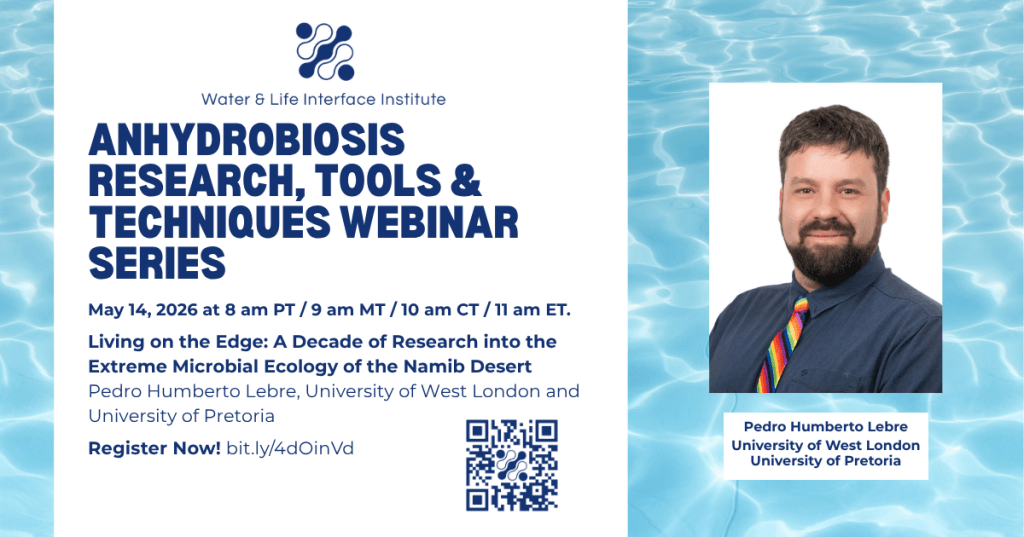
Living on the Edge: A Decade of Research into the Extreme Microbial Ecology of the Namib Desert
Pedro Humberto Lebre, PhD, University of West London and University of Pretoria
The Namib Desert is one of the oldest deserts on earth, where life is challenged by several abiotic stressors, including high temperature fluctuations, high UV radiation, low nutrient availability, and water scarcity. This combination of selective pressures has resulted in a broad range of highly specialized and unique microbiota across different desert biomes. Water, or lack thereof, is the strongest driver for biological processes in this environment, and a natural 200 km precipitation gradient from the west coast to the interior makes the Namib Desert the ideal ‘field laboratory’ for the study of water-driven structural and functional processes of soil microbial communities.
This presentation will cover 10 years of research into the water-driven ecology and functional profiles of soil microbial communities across the Namib Desert, conducted by myself and the researchers at the Centre for Microbial Ecology and Genomics (CMEG), University of Pretoria. This presentation will highlight the potential water sources in the desert and how they might shape the metabolic windows of desert-adapted soil microbial communities. It will also cover studies performed on the functional kinetics of soil communities residing in the hyper-arid gravel plains during rehydration-dehydration cycles. Finally, it will showcase recent work that fundamentally shifts our understanding of how soil microbial communities might persist in highly desiccated environments, by using a unique trophic pathway coined “aerotrophy”, i.e. the scavenging of trace gases from the atmosphere for energy and water production.

Tips and Tricks for RNA Extraction from Seeds
Danielle Hoffmann, PhD, Michigan State University
Co-Presenter: Erin Cushing, Michigan State University
Assessing RNA expression in seed tissues at various stages of development and desiccation is imperative to the mission of WALII, which seeks to elucidate the mechanisms underlying organisms at all scales of life’s ability to desiccate and rehydrate. RNA extraction from seed tissue is notoriously difficult due to the high content of oils, proteins, and polyphenols in seeds, which inhibit the efficiency of RNA extraction. Therefore, specialized methods and modifications of RNA extraction protocols are utilized to overcome the inhibitory effects of these molecules. In this technical workshop, WALII members who have successfully extracted RNA from seed tissue will share their successes and failures while troubleshooting the seed RNA extraction method. Two different RNA extraction methods that we have used for two Brassicaceae species’ seeds, Arabidopsis and pennycress, will be shared. This workshop will serve as a resource to help facilitate future researchers to master these techniques in an efficient, timely manner.
Registration
Registration for the May 14, 2026 seminar led by Dr. Pedro Humberto Lebre
Registration for the June 11, 2026 seminar led by Dr. Daniela Billi
Registration for the July 9, 2026 technical training workshop led by Dr. Matt Stata
Registration for the August 13, 2026 seminar led by Dr. Michael Menze
Registration for the September 10, 2026 seminar led by Dr. Jill Farrant
Registration for the October 8, 2026 seminar led by Dr. Julia Miller
Registration for the December 10, 2026 seminar led by Dr. Danielle Hoffmann
Please note that registration is required for each monthly session. Even if you have attended previous events in the series, you must register again for the upcoming session to receive the webinar link and event details.
Schedule
| May 14, 2026 at 8 am PT / 9 am MT / 10 am CT / 11 am ET Watch the recording here | Living on the Edge: A Decade of Research into the Extreme Microbial Ecology of the Namib Desert Presenter: Dr. Pedro Humberto Lebre, University of West London and University of Pretoria | Seminar |
| June 11, 2026 at 7 am PT / 8 am MT / 9 am CT / 10 am ET Watch the recording here | Survival Potential of Desert Cyanobacteria Under Non-Earth Conditions Presenter: Dr. Daniela Billi, University of Rome Tor Vergata | Seminar |
| July 9, 2026 at 8 am PT / 9 am MT / 10 am CT / 11 am ET Watch the recording here | Exploring the Many Applications of RNA-seq Data Presenter: Dr. Matt Stata, Michigan State University | Technical Training Workshop |
| August 13, 2026 at 8 am PT / 9 am MT / 10 am CT / 11 am ET | From Anhydrobiosis to Biomedical Innovation: Borrowing Nature’s Survival Strategies Presenter: Dr. Michael Menze, University of Louisville | Seminar |
| September 10, 2026 at 8 am PT / 9 am MT / 10 am CT / 11 am ET | Understanding Vegetative Desiccation Tolerance as a Tool for Climate Smart Agriculture Presenter: Dr. Jill Farrant, University of Cape Town | Seminar |
| October 8, 2026 at 9 am PT / 10 am MT / 11 am CT / 12 pm ET | WALII Intellectual Property and Commercialization Webinar Presenter: Dr. Julia Miller, Michigan State University | Training Workshop |
| December 10, 2026 at 8 am PT / 9 am MT / 10 am CT / 11 am ET | Tips and Tricks for RNA Extraction from Seeds Presenter: Dr. Danielle Hoffmann, Michigan State University Co-Presenter: Erin Cushing, Michigan State University | Technical Training Workshop |

